
Patient Table: Designing for Rapid Response in Addiction Care
Overview
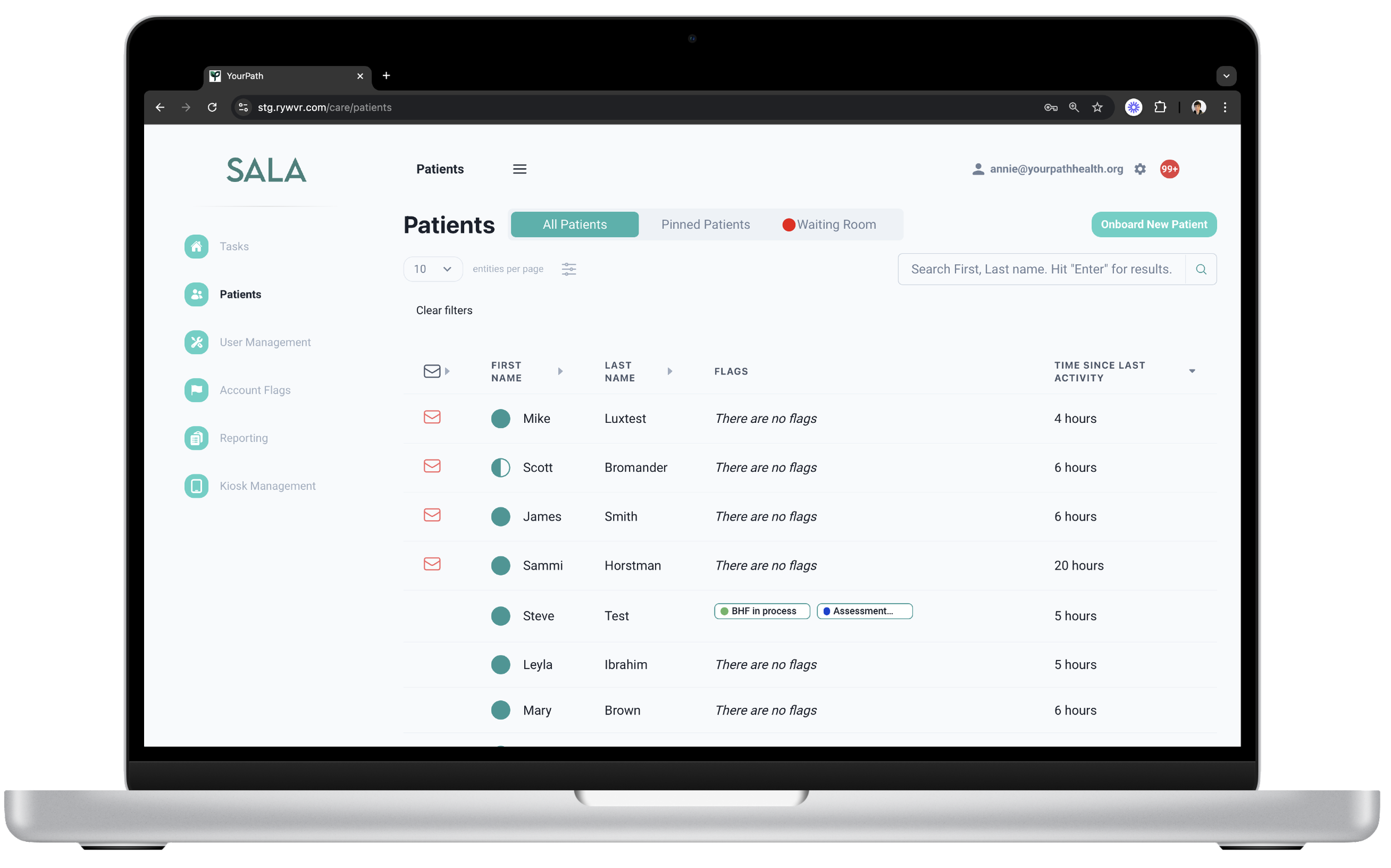
Sala is a care platform designed to accelerate access to addiction treatment. Because individuals seeking help often have a brief window of readiness, providers need immediate, high-signal insights to prioritize communication, identify risk, and begin appointments without delay. This project focused on designing core elements of the patient list to better support real-time decision-making.
Opportunity Space
Providers were managing high caseloads using existing interfaces that required too much scanning and offered limited visibility into urgent patient needs. As a result:
Unread messages were easy to miss
Communication recency was not clearly surfaced
High-risk patients were not distinguishable at a glance
Providers struggled to focus on their active caseload
Virtual appointments lacked clear “waiting room” cues
These gaps slowed response times during moments when speed is critical to patient engagement.
Insights
Through interviews, workflow observations, and guided co-design sessions, I identified key needs:
Immediate recognition of unread messages
“When someone is ready for help, timing is everything. If I miss a message by even an hour, that window can close.”
-Intake coordinator
Fast access to communication history to support triage
“The old system didn’t make it easy to see when I last interacted with someone, so sometimes patients fell through the cracks.”
-Intake coordinator
Risk indicators visible at a glance
“Some patients have really urgent needs, but there wasn’t a clear way to see that at a glance.”
-Substance use Assessor
A way to isolate active patients from the full caseload
“When everything is in one big table, it’s easy to get overwhelmed.”
-Peer Support Specialist
A clear signal when a patient is waiting for a virtual visit
“Sometimes I didn’t realize a patient was waiting for their appointment until much later.”
-Addiction services nurse practitioner
These insights shaped the redesign of the patient list into a more actionable, provider-centered tool.
Design Decisions
1. Unread Message Visibility
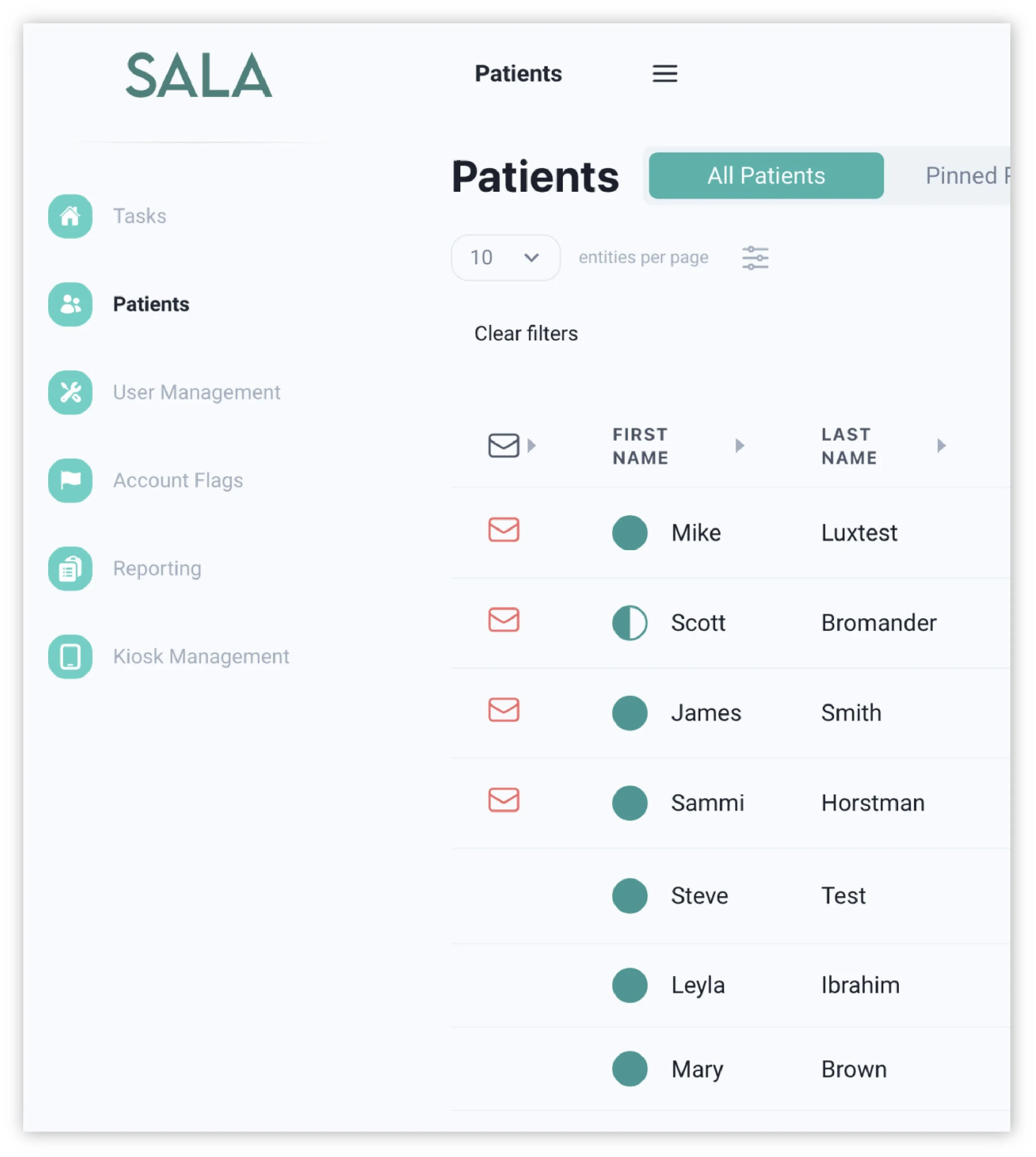
A highly visible red envelope icon appears to the left of each patient’s name, leveraging natural L→R scanning patterns. Providers can instantly see who has reached out and prioritize these interactions during the patient’s readiness window.
2. Sortable "Time Since Last Activity"
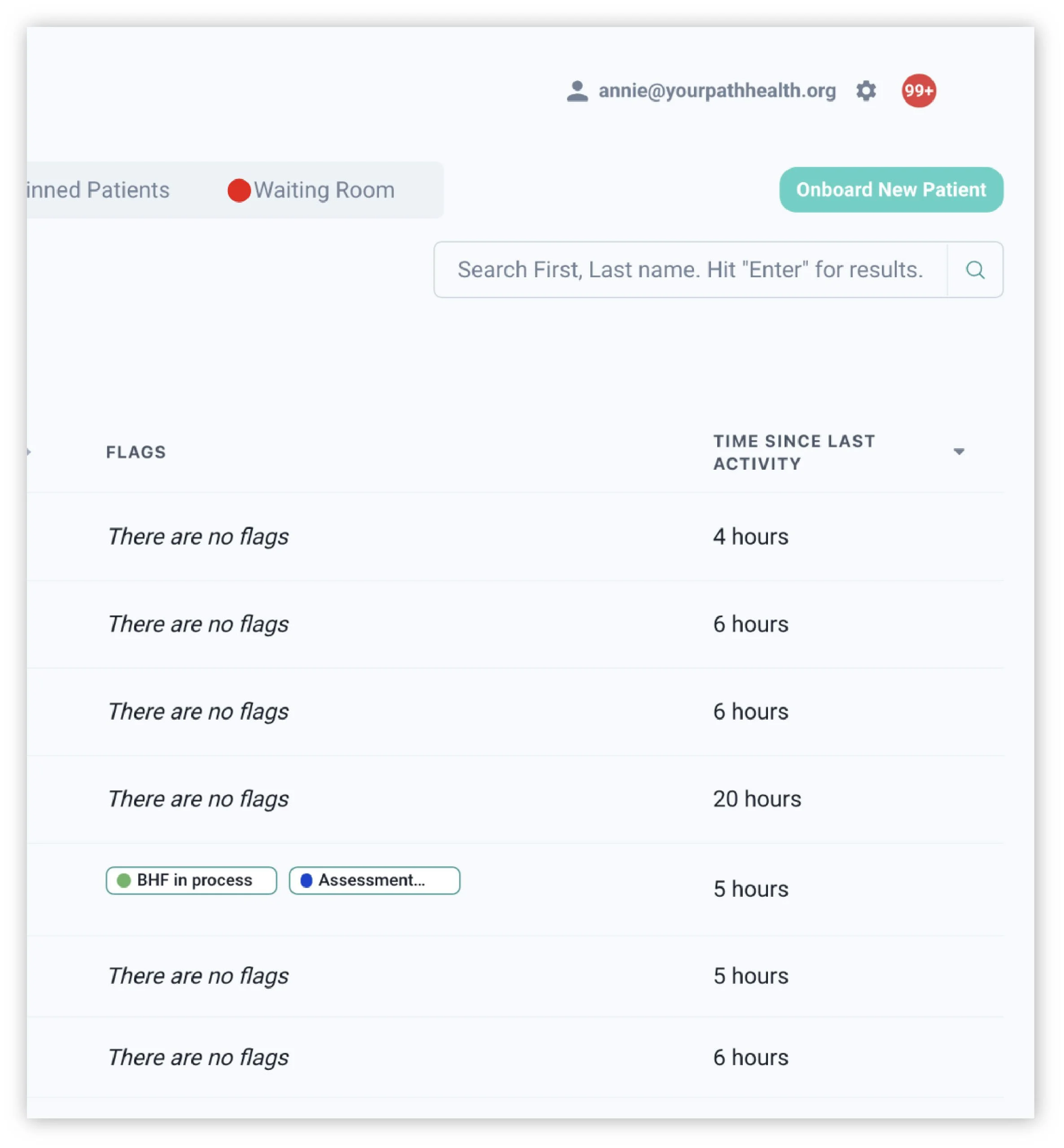
A recency column allows providers to sort the list by the most recent interaction. This supports rapid triage and ensures no patient goes too long without communication.
3. Flags for Risk and Care Context
A dedicated flags column surfaces high-value context—such as appointment type or high-risk status. These visual markers empower providers to escalate patients to higher levels of care when needed.

4. Pinning Active Patients
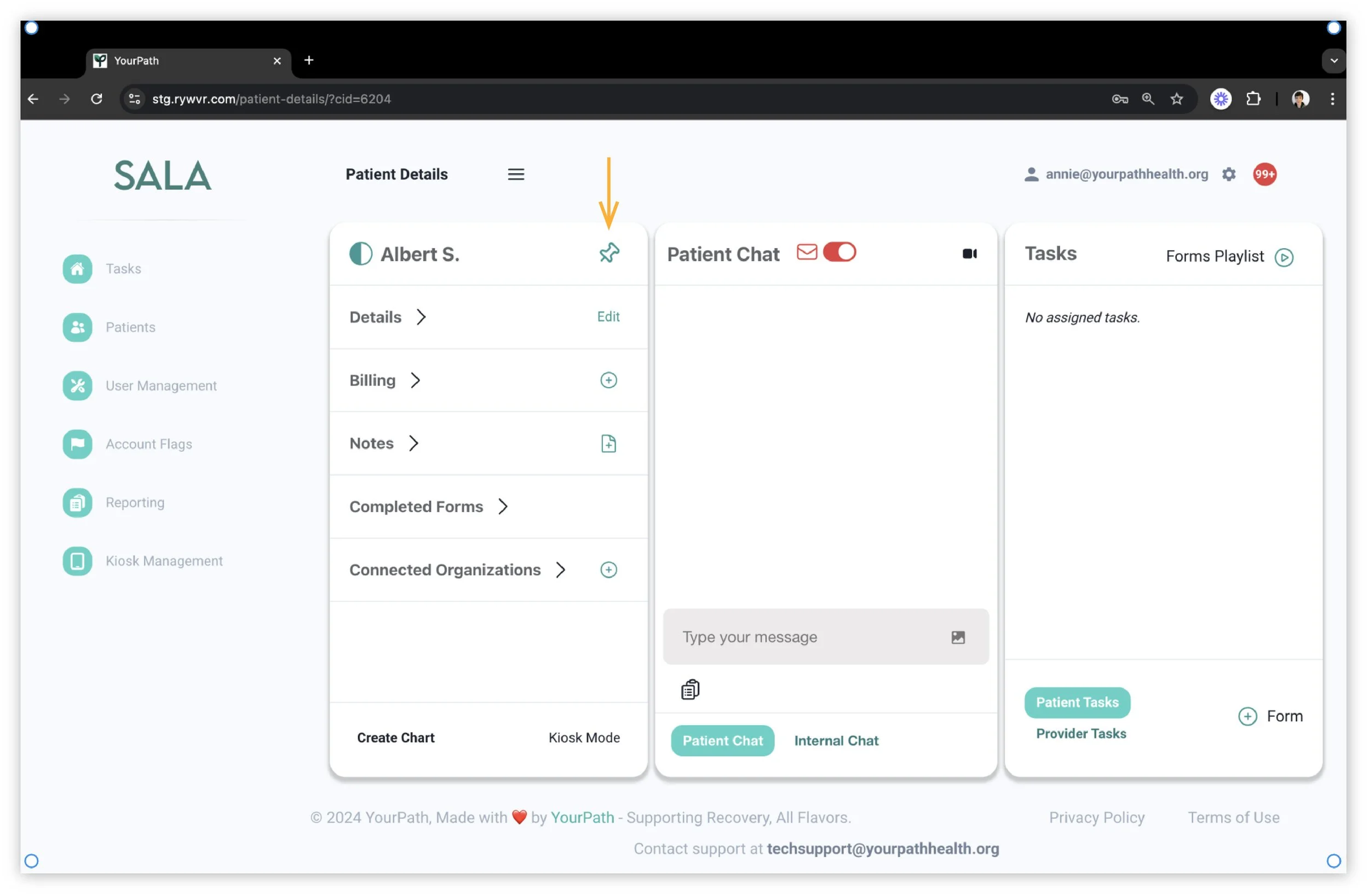
Providers can “pin” patients they are actively working with and view them in a dedicated filtered list. This reduces cognitive load, removes table noise, and supports focused case management throughout the day.
Outcomes
Sala users can “pin” patients they are actively working with from the patient details page

Users can manage their active patients from a dedicated view on the patient list
5. Virtual Waiting Room Visibility
To support timely virtual care, a waiting room view shows patients who are ready to begin appointments. Providers no longer need to dig through lists or separate systems to see who is waiting. The waiting room list also provides information about device type, wait time elapsed and the patient’s provider to help the user trouble shoot any video issues, respond in a timely manner and understand which provider is responsible for the video call.
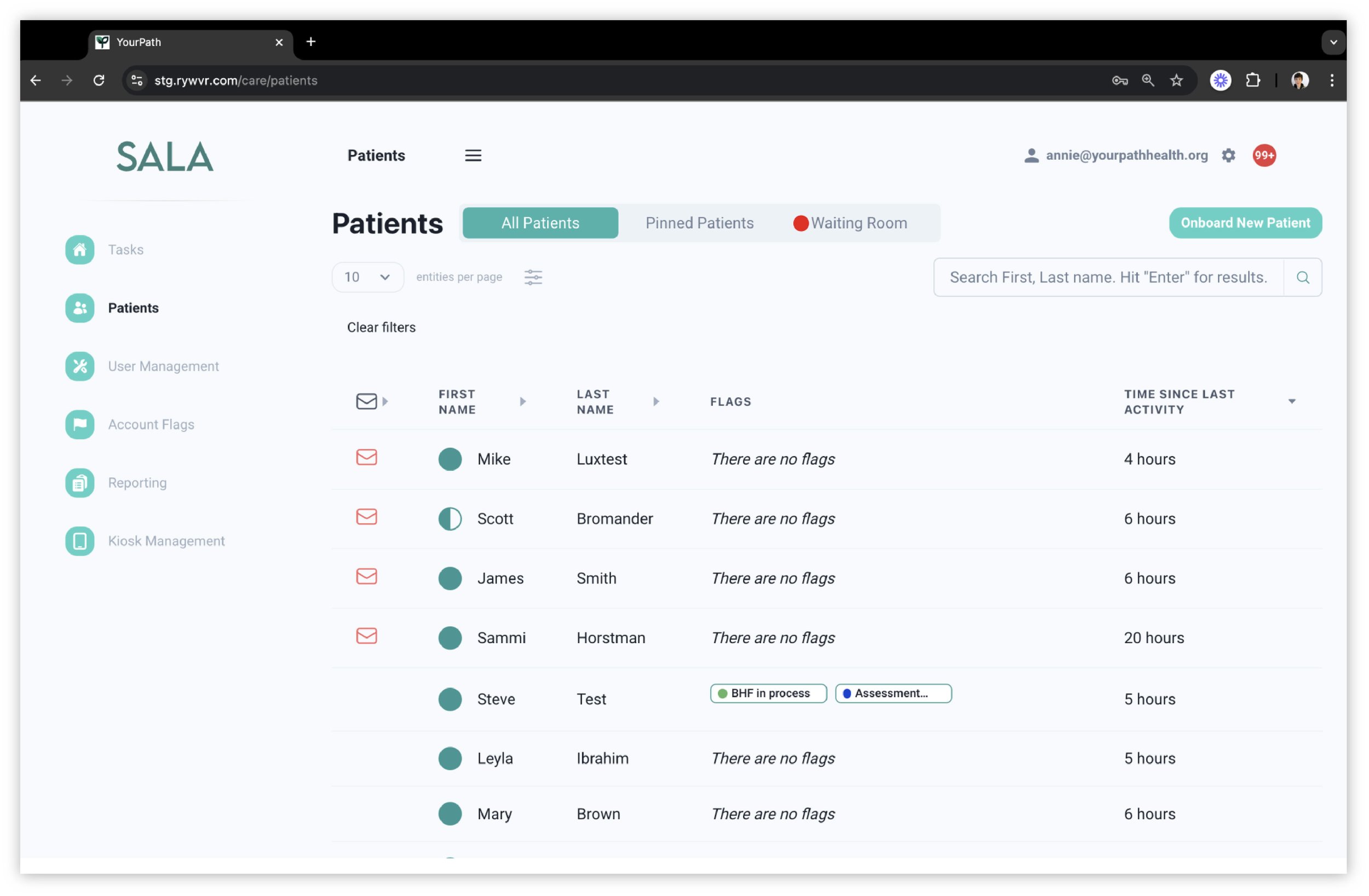
When on the main patient list, users see a red indicator on the waiting room tab when a patient is waiting for an appointment

The waiting room includes information about device type, waiting time elapsed and provider information
Faster priority recognition through clearer visual hierarchy
Reduced cognitive load via focused, customizable patient views
More timely interventions, aligned with patients’ moment of willingness
Smoother virtual visit flow, with better visibility into waiting patients
Stronger cross-team alignment, as critical status indicators are now surface-level